
Damaged drywall is one of the most common problems homeowners encounter: doorknobs can leave holes, moving furniture can cause dents and scrapes, a plumbing leak can leave behind water damage, and normal settling in a home can sometimes cause cracks. The good news is that not every drywall problem requires replacement. Many types of damage can be repaired with a professional patch, proper finishing, texture matching, and paint. However, there are situations where replacing the damaged section is the better long-term solution.
So, how do you know whether your drywall needs a simple repair or complete replacement?
At De La Rosa & Sons Drywall, we help homeowners throughout the Tucson area determine the right solution for their walls and ceilings. Here’s what you should know when deciding between drywall repair and replacement.
When Is Drywall Repair the Best Option?
Drywall repair is generally the best choice when the damage is relatively small, localized, and the surrounding material is still in good condition. A professional repair can restore the appearance of the wall without removing more drywall than necessary.
Small Holes and Dents
Small holes are among the easiest drywall problems to repair. They can result from nails, screws, wall anchors, door handles, furniture, or accidental impacts. Depending on the size and location of the damage, a repair may involve filling the hole, installing a small patch, reinforcing the area, and applying joint compound. The surface is then sanded and prepared for texture and paint.
The goal isn’t simply to cover the hole. A properly finished repair should blend into the surrounding wall so the damaged area isn’t obvious once the project is complete.
Minor Cracks
Small cracks can often be repaired, but homeowners shouldn’t automatically assume every crack is purely cosmetic. Drywall can develop cracks because of normal settling, temperature changes, movement, or other factors. The location, size, and pattern of the crack can provide clues about what may be happening.
If the crack is minor and the surrounding drywall is stable, a professional drywall repair may be sufficient. However, if cracks are large, recurring, or accompanied by other signs of movement, it’s worth determining whether there is an underlying issue before repairing the surface.
Scrapes and Surface Damage
Drywall can also become damaged during everyday life or other home improvement projects. Moving a large piece of furniture, removing shelving, installing electrical components, or completing a remodeling project can leave behind scratches, gouges, holes, and other surface damage.
If the drywall remains solid and the damage is limited to one area, replacing the entire sheet may be unnecessary. A professional can often repair the affected section and restore the surface.
When Should Drywall Be Replaced?
There are times when repairing damaged drywall is only a temporary solution. If the material itself has been significantly compromised, replacement may provide a stronger and more reliable result.
Extensive Water Damage
Water damage is one of the biggest reasons drywall may need to be replaced. A leak from plumbing, a roof, an HVAC system, or another source can cause drywall to absorb moisture. Depending on how much water was involved and how long the drywall remained wet, the material may become soft, swollen, warped, stained, or structurally compromised. Painting over a water stain doesn’t solve the problem.
Before deciding whether to repair or replace water-damaged drywall, the source of the moisture should be identified and corrected. Once that’s done, the condition of the drywall can be evaluated. If the drywall is still solid and has dried properly, a repair may be possible. If the material has deteriorated, replacing the affected section is generally the better approach.
Mold or Suspected Microbial Growth
Moisture can create conditions where mold or other microbial growth develops. If drywall has been exposed to significant or prolonged moisture and there is visible mold or evidence of microbial growth, the affected material may need to be removed and replaced. The moisture source must also be addressed. Otherwise, new drywall could eventually experience the same problem.
If you’re dealing with significant water damage or suspected mold, professional evaluation may be appropriate before beginning drywall work.
Large Holes
Small holes are relatively straightforward to patch, but larger holes can require a different approach. If a significant portion of a wall has been damaged by an accident, remodeling work, plumbing repairs, or another event, replacing that section of drywall may produce a better result than attempting to patch the entire area.
Fortunately, replacing drywall doesn’t necessarily mean removing an entire wall. In many cases, only the compromised section needs to be removed and replaced.
Sagging or Severely Warped Drywall
Walls and ceilings should generally remain flat and securely attached to their framing. If drywall is sagging, badly warped, separating from the framing, or otherwise losing its shape, a simple cosmetic repair may not be enough.
The cause of the problem should be identified first. Water damage, inadequate fastening, structural movement, or other issues may be contributing to the problem. Once the underlying cause is addressed, replacing the damaged drywall may be the appropriate solution.
What About Water-Stained Drywall?
A water stain doesn’t automatically mean that drywall needs to be replaced. For example, a small stain caused by a repaired leak may leave the drywall structurally intact. In that situation, the damaged area may potentially be repaired, sealed, textured, and painted.
However, homeowners should ask several questions before deciding to cover a water stain:
- Has the source of the leak been completely repaired?
- Is the drywall completely dry?
- Does the drywall feel soft or weak?
- Is the surface swollen or warped?
- Has the paper facing separated?
- Is there a musty smell?
- Is there visible mold or other microbial growth?
- Does the damage extend beyond the visible stain?
If the material is compromised, replacing it is generally preferable to simply covering up the evidence.
Why Texture Matching Matters
One of the most challenging parts of drywall repair isn’t necessarily fixing the hole or damaged section. It’s making the finished repair blend with the rest of the wall. Many homes have textured walls and ceilings, and even a well-executed drywall patch can remain visible if the texture doesn’t match. Professional texture matching involves recreating the appearance of the existing surface so the transition between the repaired area and the original drywall is less noticeable. This can be especially important when repairing older walls or ceilings where the existing texture may have been applied many years ago.
Do You Need to Replace the Entire Wall?
Not necessarily – when drywall replacement is required, a professional can often remove only the damaged portion rather than replacing an entire wall or ceiling.
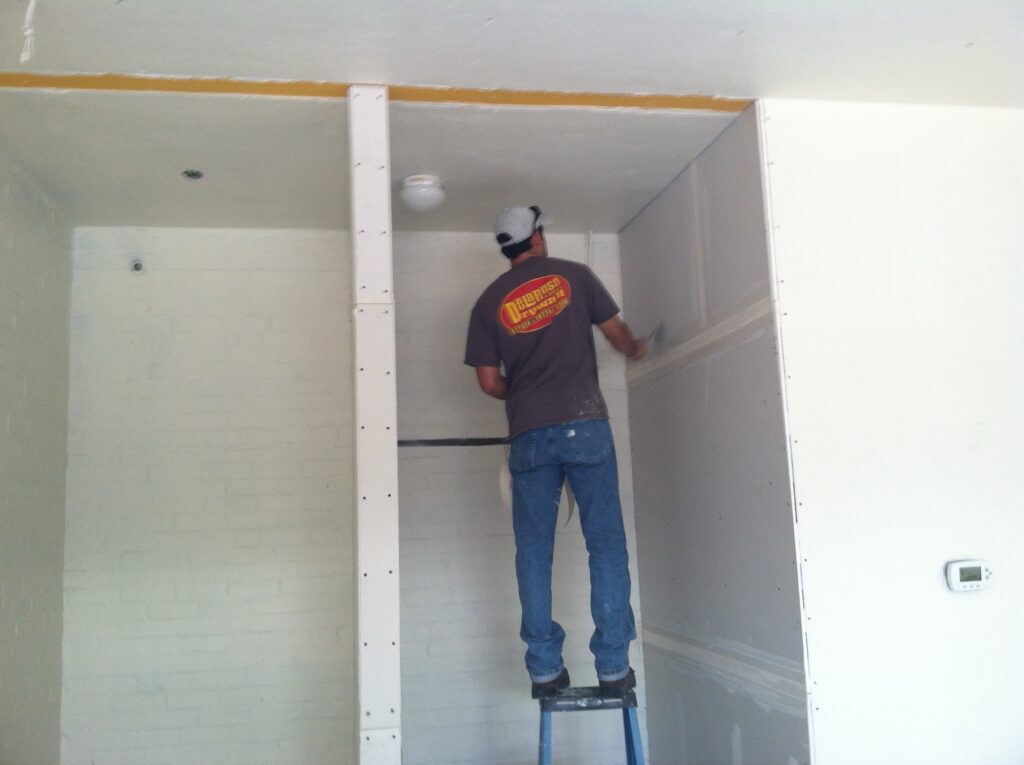
New drywall can be installed in the affected area, followed by taping, joint compound, sanding, texture matching, and finishing. This approach can reduce unnecessary demolition while still providing a durable and professional-looking result.
Drywall Repair vs. Replacement: A Quick Guide
As a general rule, repair may be appropriate when the damage is small and the surrounding drywall is healthy.
Repair is often suitable for:
- Small holes
- Minor dents and gouges
- Nail and screw holes
- Limited surface damage
- Minor cracks
- Small areas of damaged texture
Replacement may be appropriate when the drywall is extensively compromised, including:
- Significant water damage
- Soft, swollen, or crumbling drywall
- Severe warping
- Sagging ceilings
- Large areas of impact damage
- Mold or suspected microbial growth
- Repeated damage in the same location
These are general guidelines, not a substitute for evaluating the specific condition of the wall or ceiling.
Why Professional Evaluation Can Save You Money
It may seem less expensive to simply patch damaged drywall yourself or replace an entire section without investigating the cause. However, choosing the wrong solution can lead to additional work later. Replacing perfectly good drywall creates unnecessary expense and demolition. On the other hand, patching drywall that has been seriously compromised may result in a repair that doesn’t last. A professional can help determine whether the existing material can be saved or whether replacement is the more appropriate option.
Get Professional Drywall Help in Tucson
Whether you’re dealing with a small hole, damaged texture, cracked drywall, water damage, or a larger remodeling project, knowing whether to repair or replace the drywall is an important first step. De La Rosa & Sons Drywall provides professional drywall repair, installation, finishing, texture matching, and related services for homeowners in the Tucson area.
If you’re looking at a damaged wall or ceiling and aren’t sure whether you need a patch or replacement, don’t guess. A professional assessment can help you choose the right solution and avoid unnecessary work.
Contact De La Rosa & Sons Drywall today to discuss your drywall repair or replacement project and find out how we can help restore your Tucson home.